A practice manager asked us this a little while ago. It's not the sort of thing anyone wants to think about over a Monday morning coffee, but it's a fair question, and a smart one. So, here's the short answer, followed by the bits that matter if the worst ever happens.
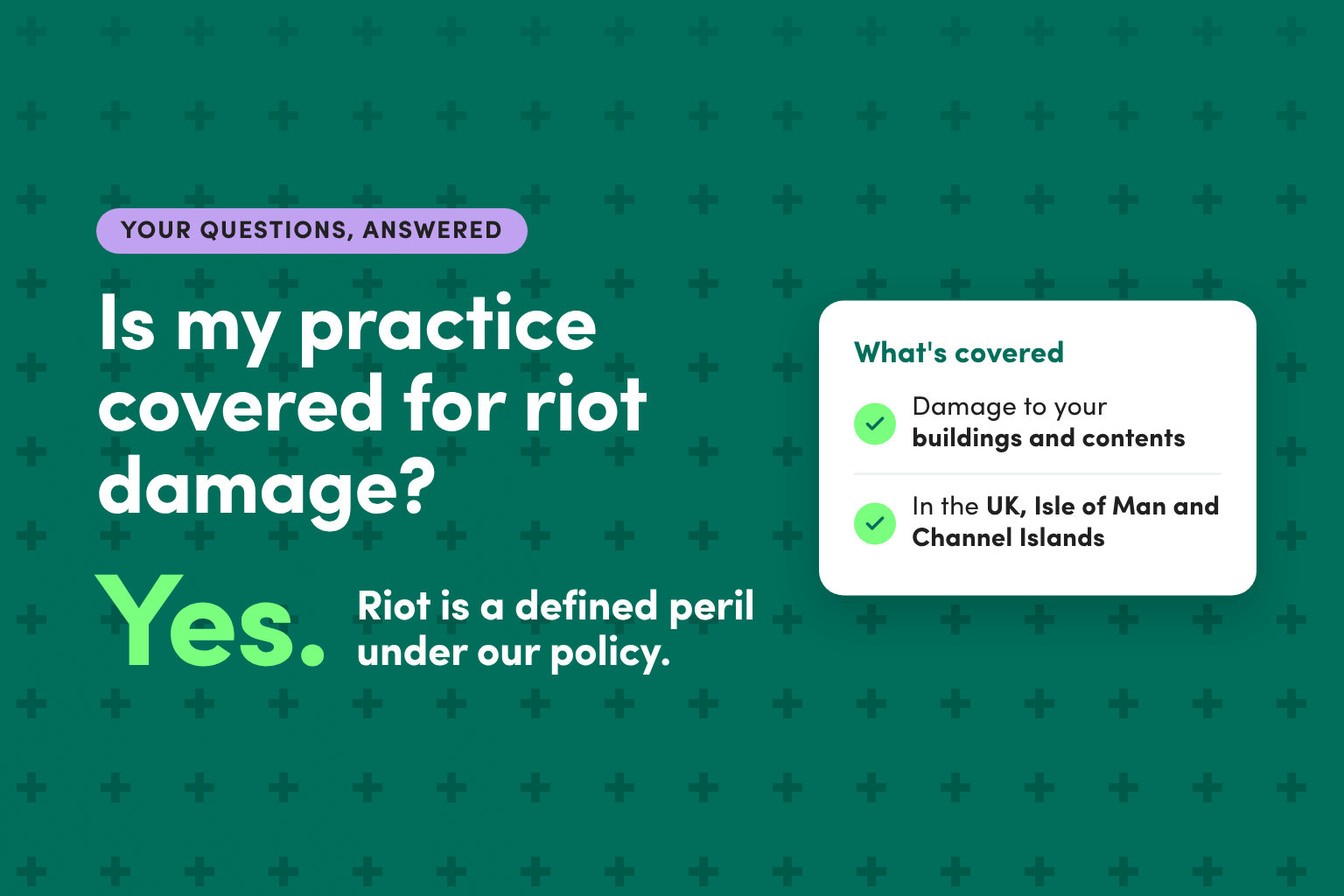
Yes, riot is a defined peril under our policy. Damage to your buildings and contents caused by riot is covered in the United Kingdom, the Isle of Man and the Channel Islands.
What's a defined peril?
Insurance has its own dialect, and "peril" is one of those words that sounds more dramatic than it is - a peril is simply a cause of loss. Fire is a peril, flood is a peril. Storm, theft, escape of water are all perils.
A defined peril is one your policy names in black and white. If the cause of the damage is on that list, and the terms are met, you're covered for it. If it isn't on the list, you're relying on hope, and hope isn't a great risk-management strategy.
So when we say riot is a defined peril, we mean it's written into the policy. You don't need to argue about whether it counts.
So what actually counts as a riot?
Here's where it gets a touch more technical. In England and Wales, the legal definition comes from the Public Order Act 1986. Broadly, it's 12 or more people together using or threatening unlawful violence for a common purpose, in a way that would make a reasonable person fear for their safety.
You might be thinking, "That's never going to happen on our high street." Most most of the time you'd be right. But, the disorder that broke out across several English towns in the summer of 2024 was a sharp reminder that it can flare up quickly, and in places nobody expected. Shopfronts, cars and community buildings were damaged in a matter of hours.
GP surgeries, dental practices and vet clinics tend to sit right in the middle of their communities, that's the whole point of them. It also means they're often on the main road, with big glass frontages and expensive kit inside. A dental chair, an X-ray unit or a vaccine fridge isn't cheap to replace. Neither is a reception area full of shattered glass.
Riot isn't the same as terrorism
Riot and terrorism are treated as separate things in insurance. Riot cover sits within the policy's defined perils, however terrorism cover is different. On our surgery insurance, it's available as an optional add-on.
Why does this matter? The cause of the damage decides which part of the policy responds. If you've never looked at whether you have terrorism cover, now is a good moment to check. It takes five minutes, and it's far easier to sort out on a quiet Tuesday than after something has happened.
What would insurers need from you?
Insurers will usually ask for a police crime reference number and/or a police report. This is the one thing to get sorted as soon as you can after an incident.
During widespread disorder, the police are stretched thin. The sooner you've reported it and have a reference number written down, the smoother your claim tends to move. Think of it like a patient's notes: if it isn't recorded, it's much harder to prove it happened.
A few other habits help a claim along too:
- Take photos and video of the damage before anything is moved or tidied, if it's safe to do so.
- Keep damaged items where you can, rather than sending them straight to the skip.
- Make the premises safe and secure. Board up broken windows and keep receipts for any emergency work.
- Let us know early. You don't need every detail sorted before you get in touch.
None of this is complicated. It's just easy to forget when you're stood in a reception area, staff and patients rattled, wondering how you'll open tomorrow.
What about the day after?
Which brings up the bit people often overlook. Fixing the damage is one thing, but keeping the practice running while it's being fixed is another.
If your surgery has to close, or move appointments elsewhere, the costs don't stop. Salaries still need paying and patients still need seeing. Our surgery policy includes business interruption cover, which is there to help with operating costs and lost revenue. How it applies to any given incident depends on your policy terms, so it's worth talking it through with us rather than guessing.
Know your policy before you need it
It is common for practices to only read their policy properly when something has already gone wrong. Nobody curls up with their insurance schedule on a Friday night.
But a little reading now saves a lot of stress later. Ask yourself:
- Do I know which perils are named in my policy?
- Do I know where my cover applies?
- Do I have terrorism cover, or would I need to add it?
- Does my team know to get a police reference number straight away?
If any of those leave you scratching your head, that's completely fine. That's what we're here for.
Got a question? Ask us
Not sure what your policy says about riot, or anything else for that matter? We're always happy to talk it through. Call the team on 020 3982 0420 or email enquiries@practicecover.co.uk.
If you've got a question you'd like us to answer in a future post, send it our way. Chances are another practice manager is wondering the same thing.